Manuel Noriega

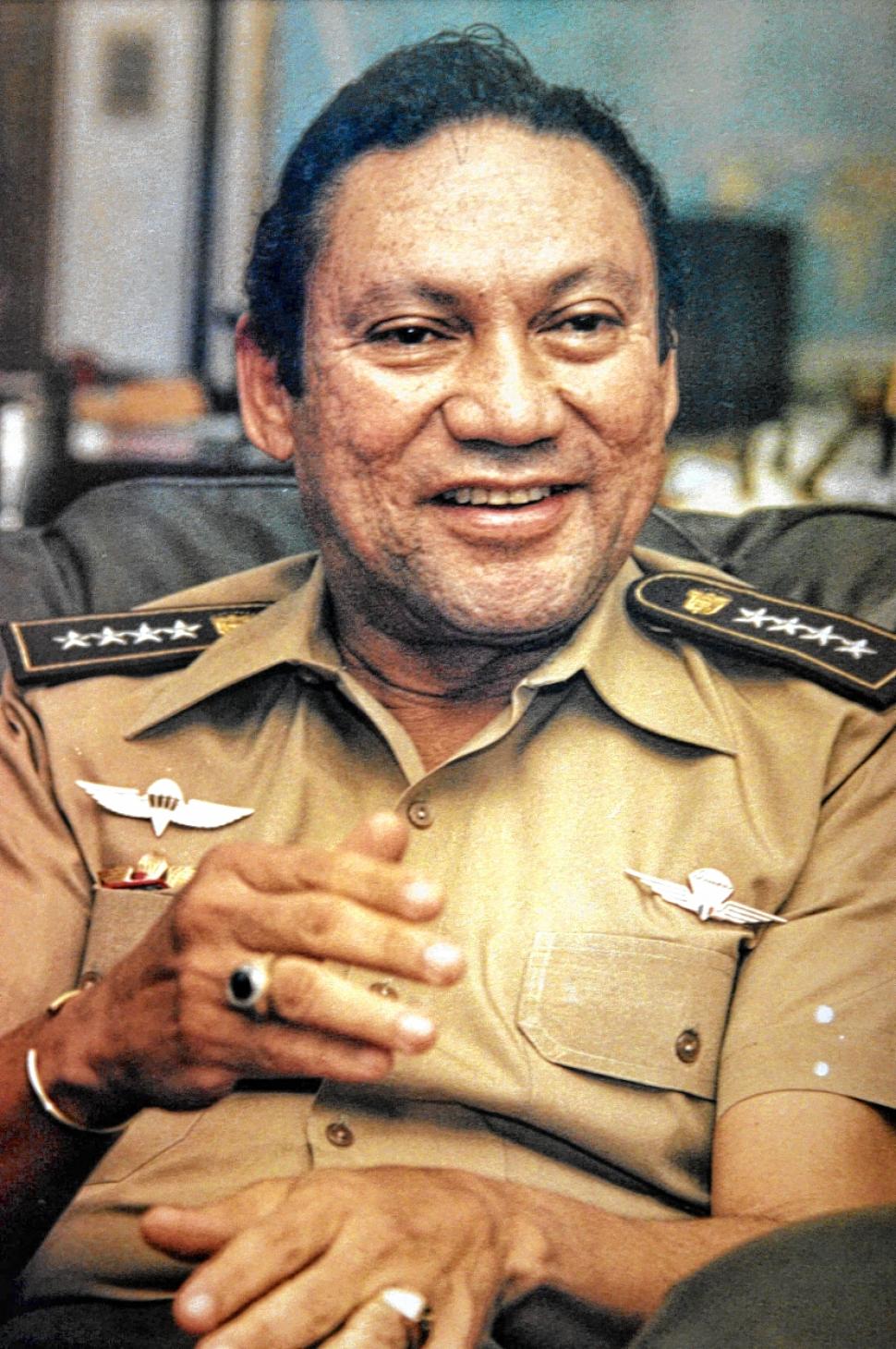
A close ally of the U.S. military and intelligence establishment from the late 1950s to the late 1980s, General Manuel Noriega was the dictator of Panama from 1983 to 1989.

Intimately involved with U.S. covert efforts to overthrow the Sandinista regime in Nicaragua and to combat leftist revolutionary movements elsewhere in Central America, Noriega ran afoul of U.S. policy-makers in the aftermath of the Iran-contra affair; was indicted on federal drug charges in February 1988; and was overthrown in late December 1989 in the U.S. invasion of Panama.

He surrendered to U.S. officials in early January 1990; was transported to the United States; tried for drug trafficking in April 1992; found guilty in September; and sentenced to 40 years in prison, where he has remained. Convicted in France for money laundering, and in Panama in absentia for murder, it is unlikely that he will ever be freed.

Manuel Antonio Noriega Moreno was born on February 11, 1938, in Panama City, the illegitimate child of a poor single woman who died when he was a small boy. Raised by his godmother in Panama City, he entered the military and was trained at the Military School of Chorrillos in Peru, where in the late 1950s he was recruited by the U.S. Central Intelligence Agency.

His relationship with U.S. intelligence agencies deepened during his training at the School of the Americas in Fort Gulick, Panama, where he completed his coursework in 1967. Commissioned as an intelligence officer in the Panama National Guard the same year, he rose rapidly in rank. In 1969 he helped dictator General Omar Torrijos fend off a coup attempt, and soon after was appointed the country’s Chief of Military Intelligence.

A shrewd political operator who deftly played both sides of the fence, through the 1970s he received hundreds of thousands of dollars as a CIA informant, and passed U.S. secrets to Fidel Castro and other U.S. adversaries. Allegedly complicit in the July 1981 plane crash that resulted in Torrijos’s death, with U.S. backing he became the country’s de facto head of state in August 1983.

By this time he was working closely with the administration of U.S. president Ronald Reagan in its efforts to overthrow the Sandinistas. He also used Panama’s strict secrecy laws to launch drug money-laundering operations, actively collaborating with the drug cartels of Medellín, Colombia.

Washington turned a blind eye to his role in the drug trade, emphasizing instead his collaboration with U.S. hemispheric "war on drugs". Despite mounting evidence of Noriega’s involvement in the drug trade, in 1987 Attorney General Edwin Meese issued Panama the Drug Enforcement Agency’s "highest commendation" for the country’s anti-narcotics efforts. Meanwhile Noriega’s base of support, in Washington and at home, had eroded.

The Iran-contra scandal purged Washington of many of his top supporters, while opposition in Panama mounted, mainly in consequence of his brutality in dealing with his opponents. The ax fell in February 1988 with a 12-count indictment on racketeering and narcotics charges issued by U.S. federal prosecutors.

After nearly two years of escalating tensions, on December 20, 1989, U.S. forces launched "Operation Just Cause", invading Panama, killing an estimated 300 civilians, wounding 3,000, and seizing Noriega. Launched in the name of the "war on drugs", the invasion had a negligible impact on the hemispheric drug trade, which has grown rapidly since.

North American Free Trade Agreement (NAFTA)


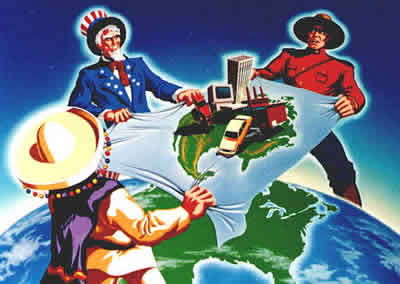
The North American Free Trade Agreement (NAFTA) is a trilateral trade pact among the United States, Mexico, and Canada. Implemented on January 1, 1994, the agreement is intended to foster open and unrestricted commercial relations among its three signatories.

Supplemental agreements, also part of NAFTA, are the North American Agreement on Environmental Cooperation (NAAEC), the North American Agreement on Labor Cooperation (NAALC), and the Understanding on Emergency Action (Safeguards). Administered in the United States by the International Trade Administration of the Department of Commerce, NAFTA is one of several regional trading blocs in the Western Hemisphere.

These include the Andean Community of Nations (CAN, among Bolivia, Colombia, Venezuela, Ecuador, and Peru, f. 1969); the Caribbean Community and Common Market (CARICOM, f. 1973), the Southern Common Market (MERCOSUR, among Brazil, Argentina, Uruguay, Venezuela, and Paraguay, f. 1991), and the Central America–Dominican Republic–United States Free Trade Agreement (CAFTA-DR, f. 2004).

NAFTA’s supporters conceive of the agreement as an important stepping stone in the creation of a Free Trade Area of the Americas (FTAA), which would include the 34 nation-states and territories of the Western Hemisphere.

In its goal of fostering unrestricted commercial relations, NAFTA follows the principles of the General Agreement on Tariffs and Trade (GATT) and its successor, the World Trade Organization (WTO).

NAFTA has sparked a huge debate between its supporters and opponents. Its principal supporters in the private sector consist of the hemisphere’s largest corporations, most of which are based in the United States.

They argue that in all three countries NAFTA will increase living standards, create new jobs, protect the environment; and ensure compliance with labor laws. Its principal opponents include labor, environmental, faith-based, indigenous rights, and consumer rights groups.

They maintain that NAFTA, like the WTO, promotes a "race to the bottom" by favoring large corporations over smaller enterprises, benefiting the rich more than the poor; increasing inequality, causing a net loss of jobs, fostering environmental degradation, and failing to adequately protect the rights of workers.

The communiqués of sub-commander Marcos, spokesperson of the Zapatistas of Chiapas, Mexico—a group whose rebellion against the Mexican government was timed to coincide with NAFTA’s implementation—convey many of the principal arguments of NAFTA’s opponents.

A large scholarly literature mirrors this debate. On the whole, the evidence demonstrates that NAFTA has increased trade dramatically while failing to meet its supporters’ expectations with regard to employment, poverty, inequality, the environment, and labor rights. In Mexico, poverty, inequality, and unemployment have all increased substantially since NAFTA’s implementation.

In the United States and Canada, the creation of new jobs has not kept pace with the outflows of capital and jobs traceable to NAFTA. The leftward tilt in Latin American politics since the 1990s has buttressed that continent’s opposition to multilateral trade agreements like NAFTA, the WTO, and the proposed FTAA.

North Atlantic Treaty Organization (NATO)


The NATO alliance is dedicated to the maintenance of the democratic freedoms and territorial integrity of its 26 European and North American member countries through collective defense.

This alliance has been the dominant structure of European defense and security since its founding in 1949 and continues to serve as the most formal symbol of the United States’ commitment to defend Europe against aggression. Following the end of the cold war, the organization also took on a peacekeeping and stabilizing role within Eurasia.

NATO was founded with the Washington Treaty of April 4, 1949, which was signed by Belgium, Canada, Denmark, France, Iceland, Italy, Luxembourg, the Netherlands, Norway, Portugal, Great Britain, and the United States.

The 12 founding members were later joined by 14 others, including Greece and Turkey, which allowed the alliance to secure the Mediterranean. From the outset, NATO was intended to deter Soviet expansion into central and western Europe.

The Washington Treaty reflected the will of the signatories to further democratic values and economic cooperation, to share the obligations of defense individually and collectively, to consult together in the face of threats, to regard an attack against one member as an attack against all members, and to collectively and individually assist the victims of an attack.

The treaty also delineated the geographic boundaries of the alliance, created the North Atlantic Council to implement the treaty, made provisions for new members to join, governed ratification according to constitutional processes, and made provisions for review of the treaty.

NATO’s civil and military organization materialized during 1949–95. The basic structures developed during this period remained into the 21st century. The civilian headquarters for the North Atlantic Council (NAC), which maintains effective political authority and powers of decision in NATO, is located in Brussels, Belgium.

NATO’s secretary-general chairs the NAC and oversees the work of the International Staff (IS). Member countries maintain permanent representatives. The council serves as a forum for frank and open diplomatic consultation and the coordination of strategic, defense, and foreign policy among the alliance members.

Action is agreed upon on the basis of common consensus rather than majority vote. Twice a year the defense ministers of the member countries meet at the NAC, and summit meetings involving the heads of state of each member country occur, during which major decisions over grand strategy or policy must be made.

After the end of the cold war, the NAC was supplemented by the Euro-Atlantic Partnership Council (EAPC) as well as the NATO-Russia Joint Council. These newer bodies facilitate peaceful coordination and cooperation between NATO and the Russian Federation and other former members of the Soviet-led Warsaw Pact alliance.

The secretary-general of NATO also chairs the Defence Planning Committee (DPC), which is tasked with planning for the collective defense of the member countries. The DPC provides guidance to the alliance’s military authorities to improve common measures of collective defense and military integration. The DPC consists of the permanent representatives; like the NAC, the DPC also serves as a forum for meetings between the defense ministers of the member states twice a year.

The senior military representatives of the member states form the Military Committee. The Military Committee is subordinate to the NAC and consists of the chiefs of staff of the member nations, who advise the NAC on all military matters and who oversee the implementation of the measures necessary for the collective defense of the North Atlantic area.

The committee is supported by the International Military Staff (IMS), which meets twice a year at chiefs of staff level and more often at the national military representatives level. Until 2003 operational control of military forces operating under the NATO flag fell to Allied Command Europe and Allied Command Atlantic.

In 2003 NATO undertook a major restructuring of its military commands. The Supreme Headquarters Allied Powers Europe (SHAPE) became the Headquarters of Allied Command Operations (ACO). ACT is tasked with driving transformation in NATO and establishing future capabilities, while ACO is responsible for current operations.

Throughout the cold war NATO faced a powerful counter-alliance in the Warsaw Pact and turmoil within the organization itself. Indeed, in 1949 the alliance members could only marshal 14 divisions of military personnel against an estimated 175 Soviet divisions.

At the NAC meeting in 1952, the members established a goal of fielding 50 divisions backed up by several thousand aircraft by the end of the year and 96 divisions by 1955. Also in 1952 the alliance introduced a new strategic concept: mass conventional defense of Europe coupled with long-range nuclear strikes against the Soviet Union and other Warsaw Pact members.

However, the cost of raising the 96 divisions required to implement this strategy proved too great, and it was quickly abandoned. In 1953 Dwight Eisenhower put forward a new strategy, which focused more on nuclear deterrence.

The new strategy came to be known as "massive retaliation" and would have involved extensive use of nuclear weapons against the Soviet Union and eastern Europe if their forces had broken through NATO’s conventional defenses in central Europe.

Nuclear crises over Berlin and Cuba in the late 1950s and early 1960s suggested a need for a more gradual strategy than massive retaliation. President John F. Kennedy endorsed a strategy of "flexible response" in 1961–63, which favored deploying more conventional forces in central and northern Europe from both the United States and the other NATO members.

Disagreement over this new strategy led France to withdraw from NATO’s integrated military command structure in 1967. NATO adopted a new doctrine in December 1967, which endorsed a flexible conventional and nuclear response to Soviet aggression. At the same time, the NAC adopted a new grand strategy favoring stable and peaceful relations with the Warsaw Pact countries.

NATO was further challenged in the mid-1970s when the Soviet Union deployed large numbers of intermediate-range nuclear missiles in Europe that were capable of striking all of the European NATO allies.

In response the members agreed to deploy Pershing II and cruise missiles in West Germany, the United Kingdom, the Low Countries, and Italy. However, a more cordial relationship between the alliance and the Warsaw Pact during the 1980s led to the dismantling of these intermediate weapons at the end of that decade.

After the end of the cold war, NATO retained several important formal and informal functions. First, it serves as a permanent and institutionalized link between the United States and an ever-growing number of European allies. In addition, it prevents the renationalization of European defense policies.

Moreover, NATO allows an institutionalized relationship with Russia and several of the former Warsaw Pact countries that have yet to join the alliance. Finally, it serves peacekeeping and stability functions in Europe and Asia.

NATO invoked article 5 of the Washington Treaty for the first time following the September 11, 2001, attacks against the United States. Many NATO countries participated in the U.S.-led war in Afghanistan against al-Qaeda and the Taliban.

Jaafar Numeiri

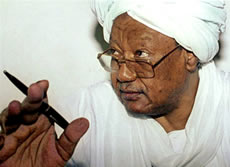
Jaafar Numeiri was born in January 1930 in Omdurman, the Sudan. In 1952 Numeiri graduated from the Sudan Military College, and in 1966 he graduated from the U.S. Army Command College in Texas. Influenced by Gamal Abdel Nasser’s Free Officers Movement in Egypt, Numeiri joined a group of military officers sympathetic to pan-Arab, socialist ideas.

In 1969 Numeiri, with the help of four other officers, orchestrated a coup to overthrow the Sudanese government. He then became the new prime minister and chairman of the Revolutionary Command Council (RCC) and renamed the country the Democratic Republic of the Sudan.

In July 1971 Sudanese communists staged a coup, and Numeiri was imprisoned. Shortly after his incarceration, Numeiri escaped and rallied loyal forces to put down the revolt and brutally crush the communists.

Numeiri quickly moved to strengthen his base of political support by changing domestic and foreign policies. In the 1971 referendum on the presidency, Numeiri received a 98.6 percent affirmative vote and was sworn in for a six-year term as president.

Spurred by Numeiri’s view of Arab socialism, in 1969 the Sudan agreed in the Tripoli Charter to coordinate foreign policies with Libya and Egypt. This union, which developed into a federation of Arab Republics, was extremely short-lived and was never really implemented.

Numeiri inherited the problem of civil war in the southern Sudan, which had begun in 1955, even before Sudanese independence. A positive step toward resolving the war was taken in 1972 with the signing of the Addis Ababa Agreement. A cease-fire was declared in the south, and autonomy was granted to the non-Muslim southern region of the Sudan.

In an effort to bolster support for his regime, Numeiri imposed sharia, Islamic law, over all of the Sudan in 1983. He also unilaterally decreed the division of the south into three regions corresponding to the old provinces; these decisions led to the resumption of the civil war.

The mounting economic crisis led to urban riots, and spreading famines in rural areas marked the final phase of the Numeiri era. In April 1985, while Numeiri was out of the country on official business, the military launched a successful coup against his regime.

Until 1999, when he was allowed to return to the Sudan, Numeiri remained in exile in Egypt while the Sudan continued to suffer through civil war, drought, famines, and mounting political repression from Islamist forces.

Canada Nunavut Territory

As early as 1963, some natives of Canada’s Northwest Territories began agitating for greater autonomy within a nation where the vast majority live within 200 miles of the U.S. border. In particular the eastern Inuit (formerly called Eskimos) sought to control more aspects of their Arctic lives above the tree line.

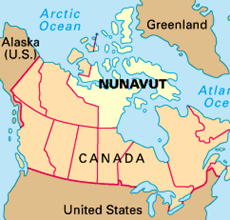
Not until 1999 was Nunavut ("our land" in the Inuktitut language) separated from other northern territories by an act of Parliament. On April 1, 1999, the Territory of Nunavut was born with Iqaluit, a city of 6,000, as its capital.

Canada’s creation of Nunavut was a dramatic example of the growing awareness of indigenous rights in several nations. As in the United States, where Native Americans began rallying for recognition and respect, creating the American Indian Movement, aboriginal groups in Australia and Canada’s 630 officially recognized "First Nations" likewise began demanding greater self-determination. In 1973 after a long period of refusing to abide by most treaty rights, Canada changed course and signed six major treaties, including Nunavut’s.

Straddling the Arctic Circle, and including Ellesmere and Baffin islands and Cape Dorset—a center of Inuit indigenous art—Nunavut has a population of 29,500, 80 percent of it Inuit, in 26 settlements spread across 770,000 square miles, a fifth of Canada’s total land mass.

Most of this vast territory is inaccessible by road or rail; everything arrives, expensively, by air. The government of Nunavut, whose first premier was lawyer Paul Okalik, oversees an annual budget of about $500 million (U.S.), more than $18,000 per resident. About 84 percent comes from the federal government in Ottawa.

Prior to the 1950s most Inuit were still leading traditional lives based on hunting and fishing. The cold war changed that. In an agreement with Canada, the United States built the Distant Early Warning, or DEW, Line, a system of radar installations designed to detect Soviet invasion across the North Pole.

Although the DEW Line was useless against nuclear submarines or intercontinental ballistic missiles, it remained in place for 30 years. In 1985 Canadian prime minister Brian Mulroney and U.S. president Ronald Reagan signed a new defense agreement. Abandoned DEW Line installations littered the Arctic landscape, in some cases leaching PCBs and industrial solvents into the ground.

Around the same time as the DEW Line’s installation, Canada’s government began to move Inuit families into permanent settlements where they were offered health care, education, and other services, but at a price. Their new lifestyle pushed many Inuit communities from subsistence hunting to fur trapping for the cash needed to buy newly available "southern" goods.

Reliable sources of income remain scarce in Nunavut, although mining, fisheries, tourism, and cultural products are being aggressively explored. The Internet plays a significant role, allowing Nunavut’s widely separated citizens to communicate with each other and the world via expensive satellite hookups that leaders hope to replace with fiber-optic installations.

The emergence of global warming patterns in the Arctic poses both threats and opportunities. Some believe that the storied Northwest Passage, now frozen most of the year, will soon be navigable in summer, cutting almost 5,000 miles from a sea voyage between Europe and Asia.

Nunavut’s government has discussed building a deepwater port and a 185-mile all-season road. On the other hand, climate change would likely further endanger Inuit ecology and traditions of self-sufficiency.

Julius Nyerere

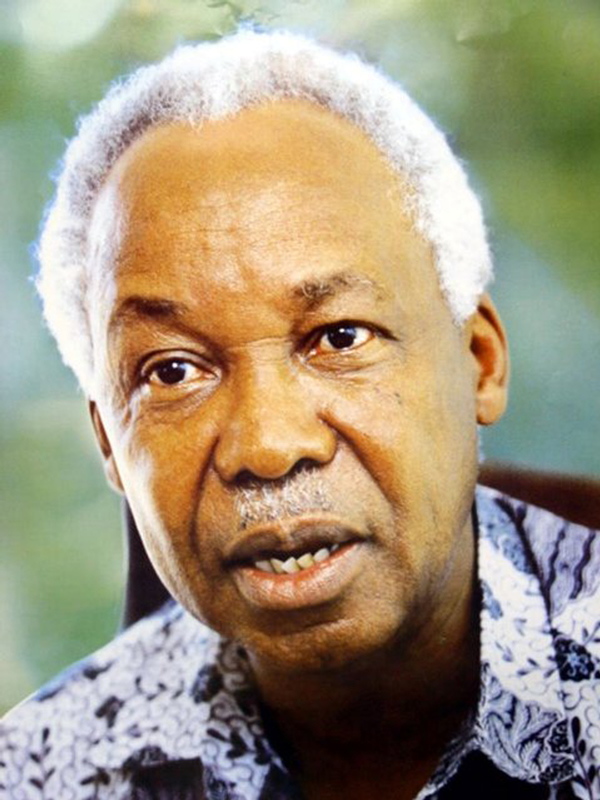
Julius Kambarage Nyerere, born in 1922, attended a mission school in Tanganyika, Makerere University College in Tanganyika, and the University of Edinburgh. He returned to teach at a Roman Catholic school near Dar es Salaam and was known as Mwalimu, or teacher.

In 1954 he organized the Tanganyika African National Union (TANU) and was elected to the legislature as Tanganyika prepared for full independence in 1961. Nyerere was elected as the first prime minister of the newly independent state and became President of the Republic in 1962. When Tanganyika and Zanzibar unified as Tanzania, Nyerere became the nation’s first president in 1964.

In the 1967 Arusha Declaration, Nyerere instituted a state program of ujamaa (familyhood) based on collective sharing, traditional African values of the family, and collectivization of farms.

Ujamaa, a form of African socialism, was supported by the People’s Republic of China, but in the global economic system, Nyerere’s ujamaa failed to bring economic growth, and in 1976 he was forced to admit defeat and end the program.

Nyerere was an effective spokesperson in the campaign to end the apartheid system in South Africa and was also one of the founders of the Organization of African Unity (OAU).

He hosted the African National Congress and Pan-African Congress, as well as other African nationalist movements that struggled against western imperial forces in Mozambique and Rhodesia. He was also a sharp critic of African dictatorships and publicly condemned Idi Amin’s dictatorship in Uganda.

In the first contemporary military intervention by an African state against other, under Nyerere’s leadership, the Tanzania military attacked Amin and forced him out of power.

Refusing to run for reelection, Nyerere retired voluntarily in 1985. He was succeeded by Ali Hassan Mwinyi and served as a sort of elder statesman in Africa until his death in 1999.

Olympics


One of the goals of Baron Pierre de Coubertin—founder of the modern Olympic Games and organizer of the first modern games in 1896—was to encourage international understanding through sports, and help to create a more peaceful world.

But after 50 years and two world wars—the bloodiest and most violent wars the world had yet seen—the Olympic dream of de Coubertin seemed very distant indeed. Too often the competition between nations would overshadow the competition of the athletes, and occasionally even the athletes themselves would be the center of controversy.

In fact the Olympic Games found themselves, in 1948, in the middle of the geopolitics of the cold war. The world found itself poised on the brink of nuclear confrontation between the United States and the Soviet Union, and it seemed the world needed the Olympic Games and de Coubertin’s vision of peace now more than ever. Often, however, the Games would be just another proxy in the ideological battle between liberal democracy and communism.

One of the most famous incidents of the 1956 Melbourne Games was the water polo match between the Soviet Union and Hungary. This match followed the Soviet quashing of the Hungarian uprising; because of political tension between the countries, the match was contested with such intensity that blood was seen in the swimming pool.

But in addition to political theater, the games also provided many moments of genuine human drama, where athletes strove to best one another under daunting pressure, after years of sacrifice and training.

For the 1960 Summer Games, held at Rome, the games were broadcast live on television throughout Europe. Highlights of the games were Cassius Clay’s (Muhammad Ali) gold medal in boxing, and Abebe Bikila’s barefoot gold medal–winning performance in the marathon.

The 1968 Winter Olympics were held at Grenoble, France, with many events spread around the region. The French skier Jean-Claude Killy, aged 24, won all three Alpine skiing gold medals. The 1968 Summer Games were held at Mexico City; the high altitude brought athletes in as much as a month early to acclimitize.

Bob Beamon broke the world long jump record at the games; his record stood until 1991. The 1972 Summer Olympics were held at Munich, Germany, where U.S. swimmer Mark Spitz won seven gold medals and the Soviet Union’s gymnast Olga Korbut won three gold medals.

These games also featured the controversial results of men’s basketball in which the American team believed that it had been cheated out of the gold medal. The games are best remembered, however, for the attack by Palestinian terrorists on the Israeli team, which resulted in the death of 17 people.

At the 1976 Olympics held at Montreal, Canada, extra security was introduced. These games featured a boycott by African nations that protested the presence of New Zealand. The cause was a match between a New Zealand rugby team and a team from South Africa. This was in violation of a Commonwealth boycott of South Africa.

The major stories of the games were Lase Viren winning both the 5,000 m and the 10,000 m again, and the Romanian gymnast Nadia Comaneci, aged 14, winning gold medals with the first-ever perfect score in Olympic gymnastic competition.

At the 1980 Lake Placid Winter Olympics, artificial snow was used, and the U.S. speed skater Eric Heiden won five gold medals. This also marked the presence of the first Chinese Olympic team since 1948 (prior to the Communists taking over).

For the United States, these games will always be remembered for the "Miracle on Ice", the victory of the American ice hockey team over the superior Soviet squad; for many, the American victory was seen as a win over communism.

The 1980 Summer Games were held at Moscow, USSR, with 100,000 people at the opening ceremony. However, the United States led a boycott over the Soviet Union’s invasion of Afghanistan in the previous year.

The games were best remembered for the rivalry between British runners Sebastian Coe and Steve Ovett; each won one gold medal. The 1984 Summer Games were held at Los Angeles. The Soviet Union and its close allies organized a boycott in retaliation for the U.S.-led one four years earlier.

The best-remembered events of these games included the 200 m record set by U.S. runner Carl Lewis, who also won the 100 m, the long jump and the sprint relay, matching the feats of Jesse Owens in 1936; and also another U.S. runner Mary Decker falling over in the women’s 3,000 m race and blaming the British/South African runner Zola Budd.

The Los Angeles Olympics was also the first summer games to which China sent a team since 1948. There was also some international concern over the high level of advertising and commercial endorsements during the games.

At the 1988 Summer Games held at Seoul, South Korea, there were no major boycotts or security problems in spite of worries about North Korea’s hostility to the games. In the track events, Florence Griffith-Joyner won three gold medals for sprinting, and Kristin Otto of East German won six gold medals.

The Seoul Olympic Games also saw Ben Johnson, a Canadian sprinter, winning the 100 m race in world record time only to be stripped of his gold medal three days later after he failed a drug test.

The 1992 Summer Olympic Games, held in Barcelona, Spain, saw the athletes of the former Soviet Union contesting as a single team for the last time, the return of South Africa, and also a team sent by the reunited Germany. In 1994 the Olympic Winter Games were held, this time at Lillehammer, Norway, beginning a different timetable for the Winter Olympics.

At the Atlanta Summer Olympics in 1996, the centenary games, a bomb killed two people in the Centennial Olympic Park, but fears of international terrorists proved unfounded with a local man arrested for the bombing. At the Nagano Winter Olympics held in 1998, curling, women’s ice hockey, and snow boarding were all introduced as new Olympic sports.

The Sydney Olympic Games in 2000 saw the summer games return to the Southern Hemisphere for the first time since 1956. The new events introduced included the triathlon and tae kwon do. The public cheered the presence of the team from East Timor at the Opening Ceremony, and also the North Korean and South Korean athletes who marched together.

The highlight was Australian Aboriginal runner Cathy Freeman winning the women’s 100 m race in front of a home crowd. It saw the U.S. team win 40 gold medals, 24 silver medals, and 33 bronze medals; Australia’s team won 16 gold medals, 25 silver medals, and 17 bronze medals.

The 2002 Winter Olympic Games were held at Salt Lake City, Utah. The choice of Salt Lake City saw accusations of corruption and bribery that had first occurred following Atlanta being awarded the Olympics in 1989.

A number of members of the International Olympic Committee (IOC) were found to have received bribes in exchange for their votes, with files held in Salt Lake City revealing demands for and expectations of bribes by IOC delegates being made public.

In a similar story, during the pairs figure skating competition, a judge was accused of collusion in awarding the gold medal to the Russian pair over the Canadian skaters; the situation was resolved when both figure skating pairs were awarded the gold.

In 2004 the Summer Olympic Games were held at Athens, Greece, the site of the first of the modern Olympic Games held in 1896. These games witnessed several scandals, the majority of them involving performanceenhancing drugs. At least 20 violations were noted, the most of any Olympic Games.

The issue of athletes taking drugs to gain an edge over rivals has become one of the dominant concerns of the games in the 21st century. In addition, the International Olympic Committee must also deal with the issue of letting professional athletes into a competition that was originally designed just for amateurs.

Some critics contend that allowing professional athletes will give developed nations an unfair advantage over underdeveloped nations, while others contend that the records set at the Olympics will mean little unless the best athletes are allowed to compete. Despite these challenges—and the ever-present fear of terrorist attacks—the Athens Games saw a record 202 nations participate with over 11,000 athletes.

The Olympic Games have proved to be a tempting avenue for nations to express a political point of view, or in more drastic fashion, commit violence in the name of one cause or another.

Despite the intrusion of politics, it is perhaps a testament to de Coubertin’s dream that athletes the world over still strive together in peaceful competition along the ideals expressed in the Olympic motto: Citius, Altius, Fortius (Faster, Higher, Stronger).
Organization of American States (OAS)

The Organization of American States (OAS) was founded on April 30, 1948, in Bogotá, Colombia, by 21 member states. Successor organization to the Pan American Union (1889–1947) and retooled to correspond to the changed security environment of the post–World War II era, the OAS was founded as a regional agency of the United Nations.

Its purposes, according to its official charter, are "to strengthen the peace and security of the continent; to promote and consolidate representative democracy, with due respect for the principle of non-intervention; to seek the solution of political, juridical, and economic problems... ; [and] to eradicate extreme poverty", among others. Headquartered in Washington, D.C., since its founding, in 2007 the OAS counted 35 member states, with Cuba suspended from participation since 1962, making 34 active member states.

Mirroring the organizational structures of the United Nations, the OAS is governed by a General Assembly and Permanent Council and led by a secretary-general elected every five years.

It has numerous affiliated organizations, organs, and entities, including the Inter-American Commission on Human Rights (IACHR, f. 1959); the Inter-American Drug Abuse Control Commission (CICAD, f. 1968); Inter-American Committee Against Terrorism (CICTE, f. 1999); and many others.

Four "Protocols" introduced major revisions to the original OAS Bogotá Charter: the Protocols of Buenos Aires (1967), Cartagena de Indias (1985), Washington (1992), and Managua (1993). In 1994 the OAS organized the first Summit of the Americas, an event henceforth held every few years.

Since its founding, the OAS has been dominated by the United States. During the the cold war era, its overriding concern was limiting Soviet and communist influence in the Western Hemisphere.

Because Marxist, communist, and socialist doctrines proved popular in many parts of Latin America in the postwar era, OAS member states could pursue one of three options: openly defy the United States and adopt a socialist or Marxist-oriented government; ally with the United States in its anticommunist policies; or pursue a "third way" by aligning with neither the Soviet nor the U.S. bloc.

In a handful of instances, OAS member states openly defied the United States, such as in Guatemala (1944–54), Bolivia (1952–64), Cuba (1961– ), Chile (1970–73), Nicaragua (1979–90), Grenada (1983), Panama (1989), and Venezuela (1999– ).

In these and other cases, the United States violated the OAS charter regarding nonintervention, which stipulated that "No State or group of States has the right to intervene, directly or indirectly, for any reason whatever, in the internal or external affairs of any other State" (Chapter IV, Article 19). More often, OAS member states cooperated with U.S. anticommunist efforts or sought to pursue a nonaligned stance in international affairs.

The United States most commonly interpreted the latter as alignment with international communism and therefore a direct threat to its national security. In the post–cold war era, the OAS has exerted a greater degree of autonomy from U.S. domination.

Organization of Petroleum Exporting Countries (OPEC)


The Organization of Petroleum Exporting Countries (OPEC) was established in 1960. Its first meeting was held in 1961, and, beginning in 1965, it was headquartered in Vienna. The charter members included Venezuela, Iran, Iraq, Kuwait, and Saudi Arabia.

Abd Allah al-Tariki, the Saudi director of petroleum affairs, played a leading role in the organization’s inception. OPEC membership was later expanded to include Libya, Algeria, Indonesia, Qatar, Nigeria, UAR, Gabon, and Ecuador.

In 1968 the major Arab oil-producing nations formed OAPEC (Organization of Arab Petroleum Exporting Countries). OPEC members met on a regular basis to set quotas for production; however, the organization lacked the mechanism to enforce the quotas, which were frequently ignored or openly flouted by individual producing nations.

Nations with large populations such as Iran, Algeria, and Nigeria tended to push for price increases. Nations with small populations and lesser economic domestic demands preferred stable prices. Because of their production capacity and huge reserves, Saudi Arabia and Kuwait were able to increase production to prevent price increases or to keep prices low.

In the 1980s Saudi Arabia’s proven oil reserves contained over 168 billion barrels, Kuwait had over 66 billion barrels, and Iraq had 43 billion barrels, as compared to 27.3 billion barrels in the United States. By the 1980s the United States was also importing over half its oil, as compared to only 25 percent in the early 1970s.

In 1970 the new revolutionary government in Libya under Muammar Qaddafi forced production cuts to secure higher royalties. The petroleum companies—dominated by the so-called seven sisters, Western-owned corporations—bitterly opposed such pressure tactics, but because of ever-increasing demands they ultimately agreed to Libyan terms. The rest of the oil-producing nations soon followed suit and secured similar concessions. The price of oil then rose from $2 to $3 per barrel and then to $5 per barrel.

During the peak of the oil boom in the 1970s Sheik Ahmad Zaki Yamani, secretary-general of OPEC from 1968 to 1969, served as the Saudi Arabian minister of petroleum. During the 1973 Arab-Israeli War King Faysal in Saudi Arabia was persuaded to use oil as a weapon, and cuts in supplies to those nations supporting Israel were announced.

However, Faysal was a staunch anticommunist, and, when the United States and Egyptian president Anwar el-Sadat argued that the oil boycott could increase the threat of communism in the Arab and Muslim world, King Faysal effectively ended the boycott by withdrawing Saudi support in 1974. In 1986, when Yamani supported raising oil prices, King Fahd removed him from office.

With its huge reserves Saudi Arabia, and, to a lesser extent, Kuwait, could force price modifications by simply increasing production. By 1996 Saudi Arabia had become the world’s largest petroleum exporter. After the Iran-Iraq War Kuwait began to flood the market, exceeding its quota and driving down prices.

The lower prices hurt Iraq at the very time that it was desperately trying to increase revenues to rebuild its economy; this was a contributing factor in the Iraqi invasion of Kuwait in 1990 and the resulting First Gulf War. Depressed prices, largely caused by high production by the Arab Gulf states and Saudi Arabia, also contributed to Ecuador’s withdrawal from OPEC in 1992.

Owing to increased demand by burgeoning Indian and Chinese economies and ongoing wars in Afghanistan and the Middle East, the price of oil reached $60 per barrel in 2006 and prices continued to rise.

High prices resulted in huge profits for Western oil companies as well as for the oil-producing nations. In one quarter of 2006 Exxon-Mobil, the world’s largest petroleum corporation, posted profits of over $7 billion.

Although governments talked about cost control measures, alternative fuel sources, and conservation, few practical programs were adopted either in the West or in Asia. Thus it remained certain that petroleum would continue to be the world’s primary energy source for the foreseeable future.

Pakistan People's Party

The Pakistan People’s Party was founded by Berkeley and Oxford-educated politician and lawyer Zulfikar Bhutto. During the presidency of General Ayub Khan, Bhutto served as a cabinet member and eventually as foreign minister.

Ayub went to war with India over Kashmir in 1965, and eventually, with the intervention of the Soviet Union, signed the Tashkent Agreement, which restored prewar boundaries and diplomatic relations between the two countries. Bhutto opposed Ayub’s signing of the Tashkent Agreement, resigned his post, and formed the Pakistan People’s Party in 1967.

The People’s Party championed the causes of socialism and democracy and denounced the Ayub regime as a dictatorship. Bhutto’s countrywide campaign against Ayub also drew support from businessmen, small factory owners, students, and rural dwellers.

Under the pressure of mounting public unrest, Ayub resigned in 1969 and handed over power to General Yahya Khan. When elections were held in 1970, the People’s Party captured a majority of votes in West Pakistan, whereas a clear majority was won in East Pakistan by the Awami League of Sheik Mujibur Rahman.

While the Awami League promoted greater autonomy for East Pakistan, the People’s Party argued for a strong centralized government. Differences between the two parties, and General Yahya’s inability to play a neutral role in the conflict, led to civil war. In 1971 East Pakistan seceded to become Bangladesh, and the People’s Party formed a government in Pakistan.

In power, the People’s Party stood for the nationalization of industry and education and for land reform. At the same time, Bhutto drafted the country’s fourth constitution, according to which he gave himself the title of prime minister, reduced the president to a figurehead, and granted himself powers that were as broad as those held by the military dictator whom he had opposed.

Factionalism within the People’s Party, accusations of preferential politics, a tribal uprising in Baluchistan over the exploitation of local resources such as natural gas, and underrepresentation of Baluchis in the structures of the state undermined Bhutto’s government.

The deaths of thousands in the uprising in Baluchistan, oppressive measures taken by Bhutto against political opponents, and accusations of having rigged the elections of 1977 led to a military coup by the army chief of staff General Muhammad Zia-ul-Haq.

Bhutto was tried for orchestrating the murder of a political opponent, found guilty, and hanged on April 4, 1979. The leadership of the People’s Party was assumed by his daughter, Benazir Bhutto.

After General Zia-ul-Haq was killed in a plane crash, rumoured to be sabotage, the People’s Party came to power under Benazir Bhutto in the elections of 1988. However, her government was short-lived, she was arrested, and her government dissolved by Ghulam Ishaq Khan, the president at the time.

The People’s Party next came to power in 1993, but the government was again short-lived; violence between ethnic and linguistic groups erupted frequently in Karachi, the government lost control of the urban center, and a power struggle between Benazir Bhutto and her brother Mir Murtaza Bhutto led to divisions within the party. In 1996, during his sister’s tenure as prime minister, Murtaza Bhutto was shot dead outside his residence in a police encounter.

Opposition leaders accused the People’s Party of state terrorism against its political opponents, and the government was dismissed in 1996 again under charges of mismanagement and corruption. Benazir Bhutto continued to head the party in exile and upon her return to Pakistan in 2007. After her assaisination on December 27, her husband and 19-year-old son were appointed party co-chairmen.

Palestine Liberation Organization (PLO)


The Palestine Liberation Organization (PLO) was established in 1964 under Ahmed Shukairy to represent Palestinian national demands for self-determination. In 1964 the Palestine National Council (PNC, or parliament) of 350 representatives met in East Jerusalem and voted on the Palestine National Charter, or declaration of independence, that declared historic Palestine as the homeland of the Palestinian Arabs. The charter has been amended several times.

In 1968 the charter added that "armed struggle is the only way to liberate Palestine". In 1988 the PLO under Yasir Arafat’s orders agreed to drop the use of terrorism, recognize Israel’s right to exist, and essentially accept the establishment of the independent state of Palestine in the Occupied Territories of the Gaza Strip, East Jerusalem, and the West Bank—the so-called mini-state solution.

Although some Palestinian groups opposed Arafat on these issues—the changes were agreed upon by the Palestine National Council, dominated by pro-Fatah Arafat supporters. Fatah (the Palestine National Liberation Movement) continued to dominate the PLO until 2006.

After the Arab defeat in the 1967 Arab-Israeli War, Shukairy stepped down as chairman of the PLO, and Yasir Arafat, the leader of Fatah, the largest guerrilla group, was elected chairman.

Arafat remained the leader of the Palestinian national movement until his death in 2004. The PLO constantly struggled to remain independent from any Arab government and often found it difficult to steer a neutral course among rival Arab governments.

Secular and all-inclusive, the PLO was an umbrella organization of some 10 different Palestinian groups, including the Marxist-Leninist Popular Front for the Liberation of Palestine (PFLP), under Dr. George Habash, and the Popular Democratic Front for the Liberation of Palestine (PDFLP), led by Naif Hawatmeh; the Arab Liberation Front, supported by Iraq; and the Popular Front for the Liberation of Palestine General Command, a PFLP splinter group supported by Syria and sometimes Libya.

The Palestine National Council operated until the 1993 Oslo Accords as a government in exile. The PNC comprised over 300 members, including fighters, union members, students, and women. The Palestine Central Council acted as an advisory board of approximately 60 representatives from all the various factions.

The Executive Committee ran the PLO on a daily basis and comprised 15 members. In contrast to many other Arab governments, the PLO was highly democratic and engaged in lively and often public debates about strategies and tactics.

The Palestine Liberation Army (PLA) was the PLO’s military wing and was often made up of fedayeen (self-sacrificers). By the 1970s the PLA had an estimated 10,000 fighters based mostly in Lebanon and Syria.

After the 1982 Israeli invasion of Lebanon the PLA was forced to scatter to a number of Arab countries. After the establishment of the Palestine Authority (PA) under the 1993 Oslo Accords, many soldiers were subsumed under the police force.

The Palestine National Fund was the PLO’s economic arm. The fund was financed by donations from Palestinians in exile as well as taxes levied on Palestinians working in some Arab nations such as Libya. Individual Arab governments, such as oil-rich Saudi Arabia and Kuwait, also provided aid. Those regimes cut off aid after the PLO supported Saddam Hussein and Iraq in the First Gulf War.

After the 1967 war, some groups within the PLO endorsed terrorist attacks on civilians. The PFLP simultaneously skyjacked four planes, landing them at a remote airstrip in Jordan in 1970; this incident precipitated "Black September", when the Jordanian army attacked and defeated Palestinian forces and ousted the PLO, which then moved its base of operations to Lebanon.

Attacks on Israeli athletes at the Munich Olympics followed in 1972. The cycle of violence escalated as PLO groups launched raids inside and outside of Israel and Israel assassinated Palestinian leaders in the Middle East and Europe. As a result many innocent civilians on both sides were killed and wounded.

Within the Arab world the PLO was recognized as the sole legitimate representative of the Palestinian people. Although it was condemned as a terrorist organization by Israel and the United States, the PLO gradually gained international recognition, and, once it renounced terrorism and recognized Israel’s right to exist, even Israel and the United States entered into both public and secret negotiations with it.

The PLO also established an extensive network of social services, including schools, orphanages, and hospitals. The Palestine Red Crescent was active in providing health and emergency care. SAMED provided an economic infrastructure of small businesses, workshops, and factories manufacturing textiles and even office furniture in Lebanon and Syria.

Many of these institutions were destroyed in the 1982 Israeli invasion of Lebanon. In the 1970s the PLO also sponsored some agricultural cooperatives in Sudan, Somalia, and other African nations. It also sponsored art and cultural events.

The Palestine Research Center, based in Beirut, focused on collecting materials and publishing books and articles on Palestinian history in order to preserve its cultural heritage. The center was also destroyed, and materials were taken by the Israelis in the 1982 war. The PLO also maintained information bureaus and had diplomatic representatives in major world capitals.

In the midst of the 1987 Intifada, or Palestinian uprising, in the occupied territories, a rival Islamist organization, Hamas, emerged to challenge Fatah’s leadership. Financed by devout Muslims, especially in conservative Arab countries such as Saudi Arabia, Hamas prospered first among poor Palestinian refugees in the Gaza Strip.

Because it competed with the PLO, Israel initially ignored Hamas but subsequently found that in many ways it proved a more dangerous enemy. When the PLO, in spite of concessions to Israel, failed to achieve a viable Palestinian state, many more young Palestinians who had grown up under Israeli military occupation joined Hamas.

When the Palestine Authority was established in the territories evacuated by the Israeli military in 1994, Arafat became the leader of the PA; he won a clear-cut majority as president in open and fair elections in 1996.

However, the PA leaders, most of whom were members of Fatah who had spent years outside the Occupied Territories, were also accused of corruption and inefficiency. After Arafat’s death Mahmud Abbas was elected president in 2005.

Fatah dominated the Palestinian parliament until it was defeated by the Islamist Hamas party in the 2006 elections and Ismail Haniyeh became prime minister. As the two main political forces—Fatah and Hamas—competed for power and the Israeli occupation of most of the territories continued, the future of the PLO remained uncertain.

Pathet Lao


The term Pathet Lao (land of Lao) is generally used to describe the communist movement of Laos that began in 1945 and continued until 1975, when Laos became communist. It was one of three groups active in the politics of Laos, the other two being the Royal Lao Government (RLG) and the neutralists.

Laos became a French protectorate in 1893. During World War II, the Japanese took control of Laos and declared it independent from French colonial rule on March 9, 1945. After Japan’s surrender, an independent Lao Issara (Free Laos) government was proclaimed on September 1, joined by the Pathet Lao, with its strong nationalist leanings.

There was a Lao committee section in the Indochinese Communist Party, and the separate existence of the Lao communist movement was established in 1945. The leader of the Pathet Lao, Prince Souphanuvong, had met the Vietnamese Communist leader Ho Chi Minh in 1945 and gained control of central Laos with the help of Vietnamese troops.

The prince had nurtured the communist movement and was prepared to fight against the French, who had seized the capital city, Vientiane, in 1946. Laos was soon engulfed in the First Indochina War, and the Pathet Lao fought along with the Vietminh and the Khmer Rouge. The granting of limited independence on July 19, 1949, by the French was not accepted by the communists.

However, Souvanna Phouma joined the new French-sponsored government in February 1950, where Souphanouvong proclaimed the parallel government of Pathet Lao along with its political organ, Neo Lao Issara (Lao Free Front).

The French defeat at Dien Bien Phu on May 7, 1954, ended its colonial rule in Indochina. The Pathet Lao was recognized as a political party with control over Phong Saly and Sam Neua Provinces and began to consolidate its position.

In December 1959 the military-dominated government of Phoumi Nosavan arrested the Pathet Lao members of the National Assembly, although Souphanouvong escaped. Laos was plunged into civil war. North Vietnam supported the Pathet Lao by sending arms, ammunitions, and troops.

The U.S. government included Laos in its containment strategy defense against North Vietnam and China. Another attempt was made to bring peace to Laos with the Geneva Accords of 1962. But the attempt failed, and Laos was soon embroiled in the Vietnam War.

A three-pronged coalition between the Pathet Lao, the royal government, and the neutralists did not last long, and the United States and Hanoi stepped up economic and military assistance to their respective allies.

War in Laos became a sideshow in the Vietnam War, marked by heavy civilian death toll. The Pathet Lao military advance captured more territory and by 1972 controlled four-fifths of the land and half the population of Laos.

Finally, the signing of the Paris Peace Agreements on Vietnam in 1973 led to accelerated negotiations in Laos. An agreement on Restoring Peace and Achieving National Concord on Laos was signed in the same year. With the United States out of South Vietnam, the North Vietnamese conquered the south in 1975.

After the fall of South Vietnam, the Pathet Lao assumed effective control of Laos, and the coalition government in Laos was dissolved. On December 2, 1975, the Lao People’s Democratic Republic (LPDR) was formed with Souphanouvong as president.

Victor Paz Estenssoro

Leader of Bolivia’s Revolutionary Nationalist Movement (Movimiento Nacionalista Revolucionaria, or MNR) and a leading figure in the Bolivian revolution, Victor Paz Estenssoro was elected to the presidency four times and played a major role in Bolivia’s 20th century history.

His overall political trajectory over four decades can be described as a gradual shift from the militant left to the neoliberal right, though whether that transformation entailed an abandonment of principles or growing pragmatism remains a matter of debate.

Born in Tarija, Bolivia, on October 2, 1907, to a prominent family, he received his law degree from San Andrés University in La Paz in 1927. Thereafter he occupied a variety of administrative posts before serving as deputy in the National Congress, where he emerged as a leading figure in the opposition movement.

In 1941 he cofounded the MNR, a leftist political party advocating far-reaching social and economic reforms. From 1943 to 1946, he served in the cabinet of Colonel Gualberto Villarroel but was forced out by domestic and U.S. opposition.

Finishing third in the 1947 presidential elections, he triumphed in 1951, results nullified by the oligarchic regime of Mamerto Urriolagoitia. There followed a period of widespread social unrest, spearheaded by labor unions and peasant leagues, culminating in April 1952 in the overthrow of the government and the MNR’s assumption of power.

In his first administration, Paz Estenssoro launched an ambitious program of social and economic reform-slashing the size of the military, extending the franchise, nationalizing the tin mines, breaking up large estates, and instituting universal public education—that met many of the demands of his constituency but galvanized right-wing opposition to MNR rule.

That opposition mounted during the administration of his successor and MNR cofounder Hernán Siles Zuazo, as did the political polarization of the country. During Siles Zuazo’s presidency, Paz Estenssoro served as ambassador to Great Britain before returning to Bolivia to seek another term as president.

He won handily, and in his second term struggled to keep the fragmenting MNR together and consolidate the gains of the revolution, while fending off a resurgent oligarchy and military and growing challenge from an increasingly militant left, led by his vice president, the labor leader and populist Juan Lechín. Expelling Lechín from the MNR and amending the constitution to permit his reelection, he won a third term in 1964 but was promptly ousted in the military coup of November 3, 1964, which ended the Bolivian revolution.

Going into exile in Lima, Peru, he returned to Bolivia to lend his support to the left-leaning military regime of Hugo Banzer Suárez, an action that led to a break with Siles Zuazo and undermined his populist credentials.

Soon repudiating the Banzer regime, in 1974 he was expelled from the country and went into exile in the United States. He returned in 1978 to run again for president, came in third, and after the results were nullified by the military, ran again in 1979, coming in second. The military again intervened, and in 1980 Paz Estenssoro again went into exile.

In 1985 he was elected as president for the fourth and last time, during which he followed a neoliberal model, slashing state expenditures and reining in hyperinflation. He retired from politics in 1989 and died on June 7, 2001, leaving a complex political legacy.

Juan Domingo Perón

Subject of what many consider the most powerful political mythology in the modern history of Argentina—that of Peronismo (Peronism)—Juan Domingo Perón remains, despite his eminently public life, a deeply enigmatic figure—at once a populist, a man of the people, a friend of the working class, a dictator, a demagogue, an enemy and ally of the military, and the politician most responsible for a host of failed government policies that nonetheless continue to resonate among large segments of the populace.

For three decades—from his burst onto the political stage in 1944–45 until his death in office in 1974—Perón dominated the Argentine political landscape, while his ambiguous and divisive legacy endured long after his death. Understanding modern Argentine history requires understanding the complex political legacy he bequeathed.

Born on October 8, 1895, in a small town near Lobos in the province of Buenos Aires to a farming family, by some accounts out of wedlock, Perón entered the military at age 16 and rose gradually in rank.

In 1929 he married Aurelia Tizón, who died nine years later of uterine cancer. In 1938, the year of his wife’s death, he traveled widely in Europe, where he came to admire the regime of Italian fascist dictator Benito Mussolini.

In 1943 he participated in a coup against the conservative regime of Ramón Castillo, and soon after became head of the Department of Labor—one of the weakest government ministries—which he used as a platform to build his own power base, forging alliances with segments of Buenos Aires’s powerful labor unions.

Named vice president and secretary of war, on October 9, 1945, he was ousted and jailed by enemies in the military. There followed one of the defining events of modern Argentine history, when mass demonstrations by los descamisados (the shirtless ones) forced his release on October 17.

Four days later he married the actress Eva (Evita) Duarte. Until her death, also from uterine cancer, in July 1952 at age 33, Evita was wildly popular among working people and coequal in creating and popularizing the Perón mythology.

Building on his strong political momentum, Perón was elected president in February 1946. During his first term (1946–52), at the height of his political power, he implemented a host of populist policies intended to solidify his support among the country’s powerful labor unions, proclaiming his populist vision a "third position" between capitalism and communism.

His policies sparked rising government debt and growing economic crisis while polarizing Argentine society into Peronist and anti-Peronist factions. Reelected in 1951, he was ousted in September 1955 in a military coup. For the next 18 years he lived in exile, mainly in Spain, in 1961 marrying nightclub singer María Estela Martínez, or Isabel Perón.

Following years of military dictatorship marked by growing social discord and political polarization, he returned to Argentina in 1973 and won his third term as president. He died in office on July 1, 1974, his wife and vice president, Isabel, succeeding him until her ouster by a military coup in March 1976.

Philippine Revolution (1986)


A popular, spontaneous, nonviolent, and distinctly religious movement restored democracy to the Philippines, on February 22–25, 1986. After nearly 400 years of colonization by Spain and the United States of America in the first half of the 20th century, the Philippines enjoyed a democratic form of government until Ferdinand Marcos became president in 1965. However, in 1972 Marcos declared martial law, citing communist insurgency but in reality because he faced the prospect of defeat in the presidential elections.

Martial law (lifted in 1981) was disastrous for the country. Government-sanctioned atrocities occurred frequently, the media was rigidly controlled, and anyone suspected of being a dissident was imprisoned.

One such political prisoner was Benigno Aquino Jr. (nicknamed "Ninoy"), a brilliant politician who was elected to the National Senate at the age of 35 and became Marcos’s most serious rival to the presidency. He was imprisoned for eight years.

In 1980 Aquino was allowed to travel to the United States for surgery, and, for the next three years, he lived in Cambridge, Massachusetts, with his family. But he was assassinated in 1983 upon returning to the Philippines.

An independent panel investigating his murder put the blame on a military conspiracy involving "some of the country’s highest ranking officers", but without giving any names. The event galvanized the nation as millions of Filipinos mourned his death and led to the "People Power" movement.

However, it took three more years before People Power would become a reality. In the interim, opposition to the Marcos regime became more frequent and vocal. Public rallies and demonstrations were often met by military reprisals. Eventually the military, too, became divided, with some calling for reform.

Late in 1985 Marcos called a "snap" presidential election on February 7, 1986. It was a move calculated to restore his popular mandate. Many people welcomed this, although it was a foregone conclusion that there would be massive electoral fraud. Corazon ("Cory") Aquino, the assassinated leader’s widow, with neither political aspirations nor experience emerged as the popular candidate.

Expectedly, Marcos declared himself the winner. But the People Power nonviolent revolution would eventually triumph by the defection of two men in Marcos’s camp: the civilian defense minister and a high-ranking general of the armed forces.

They were supported by the archbishop of Manila, Cardinal Jaime Sin, who called on Filipino civilians for help. At first a trickle, then hundreds of thousands of ordinary Filipinos from all economic strata responded, converging on the streets with no weapons, calling on the advancing soldiers and marines to join the protest.

First Woman President

Within four days, the number of defecting soldiers made it clear that Marcos no longer controlled the military. The United States asked Marcos to step down from power and to desist from military action. Fearing for their lives, Marcos and his family were flown out of the country and took refuge in Hawaii. Corazon Aquino was inaugurated as president on that day, the first woman president of the Philippines.

The popular and nonviolent People Power revolution of 1986 restored democracy, but it did not solve all the problems of the country. Twenty years later, the country still faces many political, economic, and social ills. But what People Power demonstrated was the moral superiority of nonviolent and prayerful resistance to political tyranny and moral evil.

Augusto Pinochet Ugarte

President and dictator of Chile from the bloody overthrow of democratically elected Marxist president Salvador Allende on September 11, 1973, until his resignation from the presidency in March 1990, General Augusto Pinochet ranks among the most controversial figures in modern Chilean history.

The years of his rule as president and dictator (1973–90) saw large-scale human rights abuses by the Chilean military, with an estimated 3,200 dissidents killed and disappeared, and thousands more imprisoned, tortured, and exiled.

The 17 years of his dictatorship also saw major neoliberal reforms of the country’s economy, as promoted by the "Chicago Boys", that resulted in the privatization of many state industries and entitlement programs—most notably the social security system—and that severely circumscribed the role of the state in the national economy. A polarizing figure, revered by some and decried by others, Pinochet left a complex legacy of state repression and radical economic reform with which Chileans continue to grapple.

Born in the Pacific port city of Valparaiso on November 25, 1915, the son of a custom’s inspector, Pinochet graduated from Santiago’s military academy in 1937. In 1971 he was appointed to the key post of commander of the Santiago army garrison.

In the midst of rising social and political tensions sparked by Allende’s socialist policies, Pinochet garnered the trust of the president, who in August 1973 named him commander in chief of the army.

Three weeks later Pinochet led the coup that resulted in Allende’s overthrow and imposition of military dictatorship. The months following the coup were the most violent of the regime, with tens of thousands of Allende supporters rounded up, interrogated, and imprisoned, and hundreds executed.

Among the most enduring images of the Pinochet dictatorship was the scene in the Santiago’s main sports stadium in late 1973, used as a clearinghouse for recently arrested prisoners, with a sunglasses-clad Pinochet overseeing the detention and interrogation process.

In 1980 a new constitution made the nation’s military the "guarantors of institutionality" and imposed a range of limitations on citizens’ political activities. In 1988 a plebiscite showed a solid majority opposed to continuing dictatorship, and in 1990 he stepped aside to permit national elections and a return to democratic government.

The human rights violations of the Pinochet regime were documented in the final report of the National Commission on Truth and Reconciliation (the Truth Commission, or Rettig Report), presented in February 1991 to then-President Patricio Aylwin.

On stepping down as army chief, Pinochet was granted a permanent seat in the country’s Senate, immunizing him from prosecution. Human rights activists pursued a novel legal strategy by charging him for genocide, torture, and kidnapping in a Spanish court. In October 1998 he was arrested in Britain on the charges. There ensued a 16-month legal battle over the Spanish court’s extradition order.

In 2000 he returned to Chile and was declared unfit to stand trial due to mental and physical ailments. Living the rest of his life in seclusion with his family, dogged by lawsuits and legal charges, he died on December 10, 2006. Public opinion polls after his death showed that slightly more than half of Chileans believed that he should have been prosecuted for his regime’s human rights violations.

Poland


Poland was the most rebellious of the Soviet-bloc countries, with mass protests in 1956, 1968, 1970–71, 1976, and 1980–81. The society was heavily influenced by the Catholic Church, and the memory of the Polish pope, John Paul II, remains very strong.

After the political changes of 1990, Poland made fast progress toward achieving a market economy and a democratic government and making Polish democracy work effectively by civic engagement in public discourses.

Roundtable talks on Poland’s first free elections took place in 1988–89. In April 1989 the communist leadership agreed with the Solidarity leadership on competitive elections, where just 35 percent of the seats were open to genuine competition.

During the following presidential elections, in November 1990, Lech Walesa—a former electrician, shipyard worker, and leader of the opposition since 1980—became the first democratically elected president of Poland. Later on, the parliamentary elections were held with the participation of over 100 political parties. The country saw a rough democratic start, and elections were declared again in 1993.

At that time, the successor of the communist party, the Alliance of the Democratic Left (SLD), received the largest share of the votes. In November 1995, in the second presidential elections, Aleksander Kwasniewski defeated Walesa and became the second president of democratic Poland.

The leading political issue of the last years of the 1990s was negotiations with the North Atlantic Treaty Organization (NATO). Poland joined the defense organization in 2000. During subsequent years, talks with the European Union (EU) regarding the Polish accession received much attention. Poland joined the EU in May 2004.

In the presidential elections of 2000 and the parliamentary elections of 2001, the successor of the Communist Party, the SLD, won. However, that government lost popularity rapidly after it failed to fulfill promises to upgrade the road network of the country and to undertake a profound reform of the national health system.

In addition, these years saw corruption scandals. Right after Poland’s admission to the EU, the cabinet resigned and a new cabinet was formed, with Marek Belka as prime minister.

Secrecy in the governing party and scandals contributed to the outcome of the presidential and parliamentary elections of 2005, when the conservative Law and Justice (PiS) and Citizens Platform (PO) became the largest parties in the Polish parliament, the Sejm.

PiS leader Jarosław Kaczynski declined the option of becoming prime minister because his twin brother, Lech Kaczynski, was still in the race for the presidential seat. Kazimierz Marcinkiewicz was nominated for that post; however, Jarosław Kaczynski is still considered one of the most influential persons in contemporary Polish politics.

Lech Kaczynski did win the presidential election. The main emphasis of his presidency was on combining modernization with tradition and Christianity. The influence of the Kaczynski might increase European skepticism and the focus on Polish Catholic traditions in the near future.

In the second half of the 1980s Poland’s economy struggled with mounting macroeconomic imbalances, which culminated in 1989, when hyperinflation and an extremely high central budget deficit hit the country.

After that time, Poland was regarded as one of the most successful transition economies in eastern and central Europe. The country’s GDP per capita rose from 31 percent of the EU average in 1992 to 41 percent by the end of the 1990s.

One of the challenges of the economic policy was transforming the excessive and poor investment inheritance from the command economy, which was achieved by injecting new technologies into old plants. In addition, most industry subsidies were removed, and the market was opened up to international cooperation.

Between the early 1990s and the mid-2000s, the country received over $50 billion in direct foreign investment. With the collapse of COMECON in 1990, Poland had to reorient its trade, and in few years Germany had become its most important trade partner, followed by other EU countries.

Despite all of Poland’s economic successes, there has been an unusually complicated situation in Polish agriculture and rural areas. Poland was the only country in the Soviet bloc whose farmland remained for the most part in private hands.

The farmers’ dramatically low income levels affected their farms in terms of production and development. Over half of the farms produce only for their own needs, with minimal commercial sales. Despite its small farms, Poland is the leading producer of potatoes and rye in Europe and a large producer of sugar beets.

Unlike the dramatic developments in Polish politics and economics, its society changed at a different pace. The political transformation of 1989–90 was the culmination of radical social change, which profoundly affected Polish society. New social movements and the fundamentals of a civic society were in place by the late 1980s.

Disappointment in the society in the early 1990s was in large part due to high expectations of the rapid political and economic changes, which exceeded the possibilities of the weak economy. A significant share of Polish society is Euro-skeptic, opposing globalization and stressing traditional national and Catholic values.

Polish cultural life flourished even under communist rule, but the political and economic changes opened up new possibilities for generations of artists. Polish jazz, with its special national flavor, is known worldwide, and the film industry of the country has been one of the most important in Europe.

Polish avant-garde theater, along with various high-culture music festivals and art exhibitions, are world famous, and Polish popular culture has been receiving growing attention and sponsorship within the country as well.

Pol Pot

Pol Pot (born Sar Saloth) came from a rather wealthy peasant family in the central Cambodian Kampong Thum Province. Through family connections to the Cambodian Royal Court, he was able to gain access to a formal education in both Cambodia and France.

He was not the best student and ended up in a technical school. While studying in France, Pol Pot joined several communist organizations and student groups, including the Cercle Marxist, whose members would later provide the leadership of the Cambodian Communist Party.

Antidemocratic policies imposed by Cambodian King Sihanouk and rampant corruption in the electoral process after the 1954 Geneva Conference convinced the left that they would never gain control over Cambodia through peaceful means.

A 1962 government roundup of Cambodian leftist and communist leaders left Pol Pot in charge of the party. In 1963 Pol Pot went into hiding in the jungle near the Vietnamese border and contacted the North Vietnamese government hoping that it would aid his communist movement and revolutionary aims.

Help was not forthcoming due to North Vietnam’s agreements with Sihanouk over their use of the border for the Ho Chi Minh Trail. It was in the border camps that Pol Pot fashioned the Khmer Rouge ideology.

The Khmer Rouge held that Cambodia’s rural peasant farmers were the working-class proletarians. This was necessary because Cambodia had almost no industrial working class and because most of the Khmer Rouge leaders came from peasant backgrounds.

In 1968 Pol Pot transformed himself into an absolutist leader and minimized collective decision making in the Khmer Rouge leadership. This coincided with a continuing growth of the party due to successive waves of government repression, which also shifted the loyalty of the peasants toward the Khmer Rouge.

In 1970 the national assembly voted to remove Sihanouk from power and expel the Vietnamese from the border region. This caused an antigovernment alliance between the Khmer Rouge and Sihanouk. Their main military force consisted of 40,000 Vietnamese sent to secure access to the Ho Chi Minh Trail.

During this time, the Khmer Rouge began to "liberate" significant portions of Cambodia and remolded society into their view of agrarian paradise. Communes were organized, private property was banned, and the trappings of wealth were removed from the people.

They evacuated all cities and towns they controlled and sent their people to work in rice fields. Former military and government officials, along with the rich and those who had an education, were "purged" (murdered).

These policies were applied to the entire country and even Khmer Rouge members after Phnom Penh fell in 1975. Eventually, more than one-quarter of Cambodia’s population of 8 million was killed through starvation, sickness, or murder. Education all but ceased after most intellectuals were murdered.

In late 1978 Vietnam invaded Cambodia after a series of border clashes instigated by the Cambodians. A new Vietnamese-backed regime was installed in January 1979 after Pol Pot and the Khmer Rouge fled the capital for the Thai border region.

For the next 19 years, Pol Pot led an insurgency against the new government until his death. The legacy of the Khmer Rouge has been continuing misery brought on by their sowing of millions of Chinese-supplied land mines over significant areas of Cambodia.

Portugal

Portugal has been a land of paradoxes. For much of the 20th century, it was simultaneously a weak, agrarian, poverty-stricken, isolated state on the periphery of Europe and the seat of a vast colonial empire. It had used an alliance with Britain to sustain this paradox for a long time.

Portugal relied on Britain to keep Spain at bay and to secure its claim to its colonial holdings. In return, the Royal Navy enjoyed access to a far-flung network of colonial ports to be used as coaling stations.

Modern nationalism in Portugal dates from the popular reaction to the British ultimatum of 1890, which foiled a Portuguese scheme to connect Angola and Mozambique by seizing the intervening territory.

For half of the 20th century, the country was governed by Western Europe’s most enduring authoritarian regime. Then, in 1974–76, it became the only North Atlantic Treaty Organization (NATO) country to experience a full-fledged social revolution. After approaching the precipice of civil war, Portuguese society backed down and built a working democracy.

Portugal overthrew its monarchy in 1910. The country established a new constitution the following year and became Europe’s third republic, after Switzerland and France. There were several coups over a 16-year period. In reaction to labor unrest in the early 1920s, extra-parliamentary right-wing organizations arose. These groups lent their support to a bloodless military coup in 1926.

Two years later, in the wake of financial crisis, the military regime brought an economics professor out of the obscurity of the University of Coimbra and named him minister of finance.

António de Oliveira Salazar had a limited set of priorities in that office: to generate a budget surplus and to stockpile gold. He proved to be quite effective at what he set out to do. He quickly overshadowed a succession of military prime ministers and won supporters among officers, clergy, businessmen, bankers, and landowners.

The New State

The military regime was a little more stable than its predecessor. Salazar, whose star was already rising within the regime, founded a new party in 1930, the National Union (União Nacional), to unify the regime’s supporters. In 1932, as the Great Depression advanced, he was appointed prime minister, a position he would hold for the next 36 years.

Salazar promulgated a new constitution in 1933, establishing the New State (Estado Novo). The National Assembly, consisting of the Chamber of Deputies and the Corporatist Chamber, had severely limited powers. Salazar selected nearly all candidates personally.

Rights and liberties proclaimed by the constitution were nullified by government regulation. Various sectors of society were organized from above in corporatist fashion. The political police maintained surveillance over potential opponents, many of whom fled into exile. Censors erased any hint of dissent.

From 1936 to 1944 Salazar was also minister of war. In that position he found he could shrink the size of the army and control officers’ salaries, transfers, retirements, and even marriages.

Officers were encouraged to marry wealthy women so that their salaries could be kept low. A politicized government-run militia, the Portuguese Legion (Legião Portuguesa), partially offset the army’s influence.

Thus it was Salazar, not the military, who consolidated the authoritarian regime. His was a conservative, corporatist police state, but it was not a true fascist state. It did not seek to overthrow traditional elites or mobilize society around its goals.

Rather, Salazar sought to demobilize—or even freeze—society and to reject modernity. Rather than exalting war, Salazar strove for a kind of neutrality. In any event, his austere policies left the armed forces with a very low level of effectiveness.

Spain and World War II

Salazar viewed Spain’s leftist Popular Front government as a threat. When General Francisco Franco rebelled against it in 1936, launching the Spanish civil war, Portugal officially followed the lead of Britain and France by promising nonintervention, but surreptitiously funneled aid to Franco.

Franco’s agents were allowed to operate on Portuguese territory. Thousands of volunteers went to Spain to fight against the Republican cause. At the end of the war, in March 1939, Salazar and Franco signed a treaty of friendship and nonaggression, known informally as the Iberian Pact.

Salazar declared Portugal’s neutrality in World War II on September 1, 1939, the very day Poland was invaded. He also sought to keep the war as far away as possible by bolstering Spain’s neutrality. In the wake of its civil war, Spain was in no condition to take an active role in World War II, but Portugal’s position highlighted the potential costs of even a passive role, as in allowing the Germans to pass through to take the British stronghold of Gibraltar.

The strategic situation changed for the Iberian Peninsula as the Germans became tied down in the Soviet Union and the Allies moved into North Africa and Italy. It was now highly unlikely that Spain would intervene on Germany’s side. Salazar allowed himself to be persuaded to join the Allied cause, albeit passively. From the Allied perspective, the Azores were the key objective.

Situated in the mid-Atlantic, these Portuguese islands would be useful bases both for antisubmarine warfare and for refueling transatlantic flights in the buildup prior to the great invasion of France. First Britain, and then the United States, acquired access to facilities there, and Portugal ceased selling tungsten to Germany while still claiming to be neutral.

Postwar Portugal

Portugal’s shift put it on the winning side, improving its bargaining position in postwar Europe and increasing its chances of getting back East Timor and Macao, which had been occupied by the Japanese.

Still, the semifascist state was in an ambiguous position after the war. It began to describe itself as an "organic democracy" rather than a "civilian police dictatorship", an expression that had been used in the 1930s.

Portugal was not invited to the San Francisco conference, which established the United Nations, and was denied UN membership until 1955. Portugal was, however, a founding member of NATO chiefly because the United States still wanted access to bases in the Azores.

Portugal’s relations with the United States and NATO replaced its traditional alliance with Britain. Unlike Britain’s earlier guarantee of Portugal’s overseas territories, however, NATO’s area of responsibility was expressly restricted to Europe to avoid its being drawn into colonial wars.

A certain "softening" marked the Salazar regime in the postwar era. There was no real institutional change, but some of the more fascistlike institutions were allowed to erode. On the other hand, after a dissident general managed to win 25 percent of the vote in presidential elections in 1958, the direct election of the president was discontinued.

A degree of economic liberalization led to the growth of the service sector and a larger middle class in the 1960s. Industry, previously limited to textile production, added electrical, metallurgical, chemical, and petroleum sectors.

A stroke immobilized the dictator in 1968, although he lingered for two more years. His successor was Marcello José das Neves Caetano, who, not coincidentally, had also succeeded him in his chair at the University of Coimbra.

Caetano brought technocrats into the regime, retired some of Salazar’s old-school hangers-on, and favored economic development over cultivated stagnation, but again the basic system remained.

Africa

War was spreading in the African colonies of Portuguese Guinea (Guinea-Bissau), Angola, and Mozambique. The policy of the New State had been to instill pride among the Portuguese in their empire, a legacy of Portugal’s glory in the age of discovery. The state also reasserted national control over the colonies, where foreign corporations had conducted much of the economic activity.

African farmers were compelled to shift from subsistence crops to cotton for the Portuguese market in the 1930s, and more so as World War II disrupted other trade sources. Portuguese investment in Africa began to take off in the years after the war. Portuguese emigration tripled the white population of Mozambique and quadrupled that of Angola between 1940 and 1960.

Initially, even the outbreak of the wars of national liberation spurred economic growth, as the state responded by boosting civil and military investments. All of these changes disrupted the lives of the Africans, and many of them also undermined the few existing bases of support for Portuguese rule.

In 1961 a revolt against forced cotton cultivation broke out in Angola. Fighting escalated with retributions and counterretributions; it spread to Guinea in 1963 and Mozambique in 1964. The government quickly repealed forced cultivation and forced labor. It also mobilized troops and dispatched them to Africa.

Large numbers of Africans were concentrated in strategic villages (aldeamentos) where their actions could be controlled. In 1961 the United States called on Portugal to decolonize. The insurgents sought and received military aid from the Soviet bloc and China.

In order to fight the leftist insurgency most effectively, the military high command assigned junior officers to read the political tracts of African revolutionary leaders, such as Amílcar Cabral of Guinea-Bissau.

To their ultimate surprise, a sizable number of junior officers were convinced that the insurgents were right. Some of them also concluded that Portugal itself was an underdeveloped Third World country in need of "national liberation".

Revolution of The Carnation

A diverse group of disgruntled junior officers in 1973 formed a clandestine political organization, the Armed Forces Movement (Movimento das Forças Armadas, MFA). On April 25, 1974, the MFA deposed Caetano. The New State collapsed without resistance. Holding red carnations, demonstrators had persuaded other military units not to resist.

The MFA then stepped back, but this proved only temporary. The young officers would soon be in the midst of a political free-for-all to determine the direction of the revolution. They too coalesced into a number of factions built around competing political orientations and personalities.

Captain Otelo Saraiva de Carvalho became the focal point of one radical faction, once styling himself as the Fidel Castro of Europe. Colonel Vasco Gonçalves began as a moderate, but moved to a position close to the Portuguese Communist Party. A moderate faction, later dubbed the Group of Nine, formed around Lieutenant Colonel Melo Antunes.

Finally, further behind the scenes until the last stages of the revolution were the "operationals", a group of officers largely concerned with professional military matters and associated with Lieutenant Colonel António Ramalho Eanes.

The Junta of National Salvation (Junta de Salvação Nacional) was formed from moderate senior officers. General António de Spínola, a former military governor of Guinea-Bissau, was invited to lead the junta as provisional president of the republic.

Palma Carlos, a liberal law professor, was named provisional prime minister. Political parties of all stripes were legalized, and political prisoners were released. Political exiles streamed back into the country.

Cease-fires were arranged in Africa. In one of the most fateful decisions of the new regime, the leaders promised elections for a constituent assembly within a year, the first real elections in over half a century, and with universal suffrage and proportional representation.

The revolution had released popular tensions that had been building up for decades. Turmoil spread quickly in the newfound freedom, and rival power centers competed to control the situation. Spurred on by the newly legalized Portuguese Communist Party, Maoists and other leftist groups and workers staged strikes and seized factories, shops, and offices.

Students took over schools and denounced teachers for "fascist sympathies". Services broke down, and shortages became common. Right-wing groups, especially in the conservative rural north, began to mobilize and arm themselves.

In July the Palma Carlos government collapsed amid the turmoil, and prominent members of the MFA moved into key positions. Carvalho was promoted to brigadier general and put in charge of the army’s new Continental Operational Command (Comando Operacional do Continente, COPCON), which became the principal arbiter of order as the police disintegrated.

Colonel Vasco Gonçalves was appointed to the position of prime minister. The MFA radicals regularly overruled Spínola’s decisions and also forced him to accept the independence of the colonies.

In September a major demonstration planned by Spínola to bolster his position forced a confrontation with COPCON, which resulted in Spínola’s resignation. General Francisco da Costa Gomes, who was more sympathetic to the left, assumed the presidency.

The most radical phase of the revolution began in March 1975. Spínola launched an unsuccessful coup attempt on March 11. In response, the radical wing of the MFA abolished the Junta of National Salvation and formed the Revolutionary Council (Conselho da Revolução), some 20 officers responsible only to the MFA Delegates’ Assembly.

The council nationalized the banking system, press, utilities, and insurance companies. With elections for the Constituent Assembly scheduled for April 25, the anniversary of the revolution, the MFA pressed a "constitutional pact" on the six largest parties, which recognized the permanent supervisory role of the MFA in a "guided" democracy.

Turnout was high for the elections, in which 12 parties competed, but the outcome shocked the radicals. The moderate Socialist Party came in first with 37.9 percent, followed by the right-of-center Social Democrats (originally called the Popular Democrats) with 26.4 percent. The Communists, the electoral ally of the MFA radicals, garnered only 12.5 percent.

Talk of Civil War

The MFA responded during the "hot summer" (verão quente) of 1975 by styling itself as a national-liberation movement. In the south, landless agricultural laborers seized large estates and declared them collective farms. Moderate Socialists and Social Democrats resigned from the government. Small freehold farmers formed armed groups, held counterrevolutionary demonstrations, and bombed the offices of leftist parties.

Plans were drawn up for a possible alternative government in the north. COPCON was beginning to disintegrate, and individual army units were under pressure to declare their political orientation. Both society and the MFA itself were becoming increasingly polarized, and there was talk of civil war.

As a consequence of the growing tension, Gonçalves and his government were pressed to resign at the end of August, and they did so. A new, more moderate provisional government was installed.

Dissatisfied with this outcome and determined not to "lose" the revolution, radical paratroopers attempted to organize a coup in November 1975. Like Spínola’s coup attempt, however, this backfired. Lieutenant Colonel António Ramalho Eanes, of the MFA’s professional military faction, led a purge of the MFA radicals. COPCON was disbanded and Otelo, its commander, placed under house arrest.

Eanes was named army chief of staff and made a member of the Revolutionary Council. The "constitutional pact" was renegotiated in February 1976. Elections were held for the new Assembly of the Republic in April, and Eanes was elected president in June with 61.5 percent of the vote in the first round.

The Constituent Assembly sought to avoid both the weak, unstable governments of the 1911 constitution and also the authoritarianism of the 1933 constitution. Based on the French model, the new system called for both an elected president with real powers and an executive prime minister chosen by a majority party or coalition in a freely elected parliament.

The renegotiated constitutional pact still called for socialism as the goal of government and society and institutionalized the legacy of the revolution. Moreover, it retained the Revolutionary Council, still a self-appointed and purely military institution, and gave it the power to safeguard the legacy of the revolution and judge the constitutionality of legislation passed by the civilian government.

The first elected government was led by Mário Soares of the moderately leftist Socialist Party. In 1979 however, a center-right government of Social Democrats and Christian Democrats was elected. The inherent tension between the elected government and the essentially undemocratic council became evident as the cabinet sought to privatize portions of the economy.

After a standoff that lasted roughly from 1979 to 1982, a process of normalization set in and the undemocratic vestiges of the revolution were gradually excised. In particular, a constitutional reform in 1982 abolished the Revolutionary Council and sent the army back to the barracks.

In the elections of 1986 Soares became Portugal’s first civilian president in 60 years, replacing Eanes. Another constitutional reform, in 1989, eliminated the requirement to keep the nationalized sector of the economy.

The moderate Socialist and Social Democratic parties had increasingly come to dominate the political system, reducing the need for multiparty coalitions and increasing the stability of government. Portugal had become a far less hierarchical and far more pluralistic, democratic, and dynamic society than it had been before 1974.

In 1986 the European Economic Community (now the European Union) accepted Portugal and Spain simultaneously as members. The opening to trade, the inflow of European investments for infrastructure and other purposes, and the constitutional changes of 1989 spurred growth and helped transform the economy.

Economic growth surpassed the European average in the 1990s and until 2002. While, like any country, Portugal was not without its scandals, controversies, and disagreements, by the end of the century it had become integrated as a solidly democratic, stable, and respected member of the European community.
Related Posts Plugin for WordPress, Blogger...